
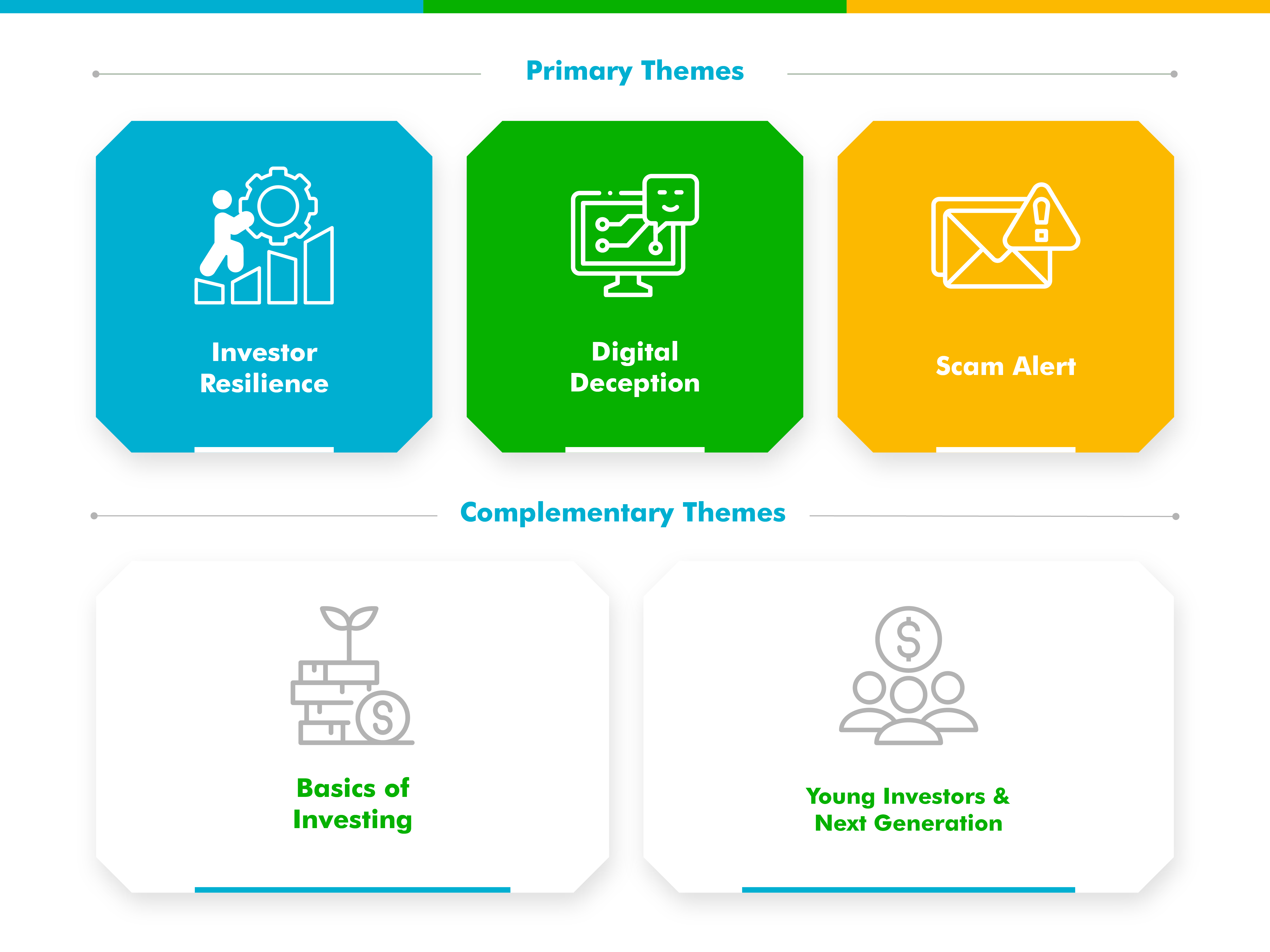
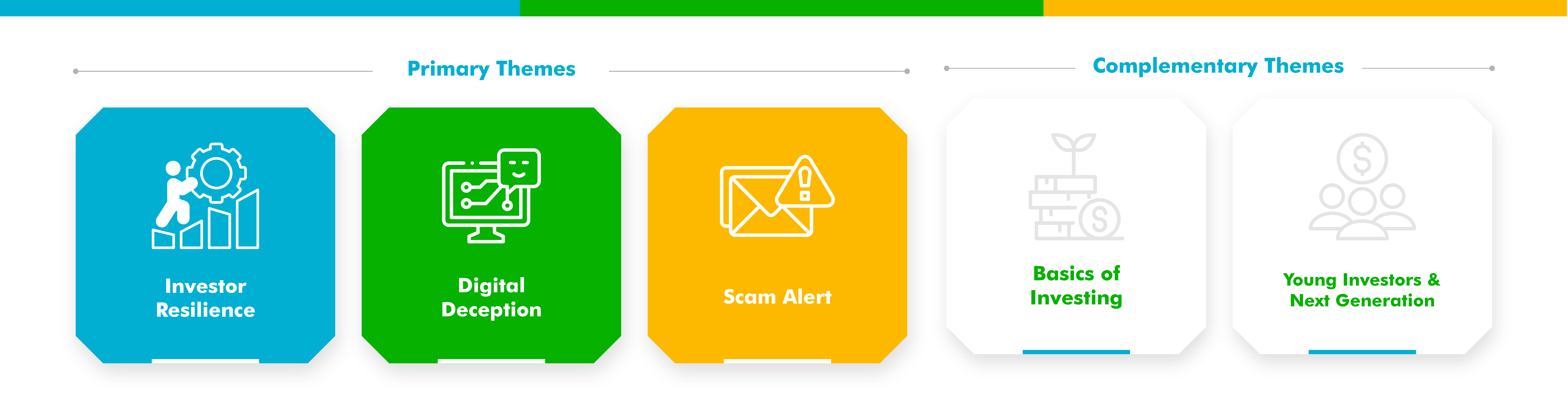

Investor Resilience
Smart Investors:
Recognize that market volatility is normal; maintain a disciplined long-term strategy and resist reactive decisions.
Regularly review and rebalance portfolios to ensure continued alignment with long-term goals as circumstances evolve.
Build financial resilience through diversification across asset classes, geographies, and investment horizons.
Seek guidance from qualified, registered financial professionals during periods of market stress or major financial change.
Establish an emergency fund and manage debt prudently before committing funds to market investments.
Maintain disciplined long-term investing habits through changing market conditions to benefit from compounding over time.
Recognize behavioral biases: loss aversion, herd mentality, overconfidence, and recency bias distort decisions.
Understand that investor resilience requires not just financial knowledge, but behavioral discipline and the ability to stay the course.
Avoid emotionally driven decisions made in response to short-term events, news cycles, or social media trends.
Plan for unexpected challenges, such as job loss, health emergencies, and market downturns, with a resilient financial plan.

Digital Deception
Smart Investors:
Understand that AI tools, including robo-advisors and algorithmic platforms, can support investment decisions but are not a substitute for independent research and sound judgment.
Understand that AI-driven platforms may be designed to maximize user engagement and trading frequency, which may not be aligned with long-term investor goals.
Know that AI systems are only as reliable as the quality, recency, and objectivity of their training data, and that they can reflect systemic biases.
Be aware that AI-enhanced fraud, including deepfakes, voice cloning, and AI-generated documents, represents a growing and serious threat to investors.
Stay alert to deepfakes: fabricated video endorsements, synthetic influencer content, and cloned-voice fraud are increasingly being used to deceive investors.
Critically evaluate AI-generated financial content, which may prioritize persuasion and engagement over accuracy or investor interests.
Recognize that AI tools may generate responses that appear authoritative but can contain factual errors or fabrications, often referred to as hallucinations.
Protect their interests by critically assessing AI-generated recommendations and exercising independent judgment when making decisions.
Read and carefully consider all disclosures regarding the role of AI in generating investment recommendations before acting on any suggestion.
Build AI literacy as a core and ongoing investor competency, and understand how AI can be manipulated and used against investors.

Scam Alert
Smart Investors:
Verify registration and regulatory authorization of any investment professional or platform before committing any funds.
Never disclose financial data, account credentials, passwords, or authentication codes in response to any unexpected communication.
Research investment opportunities exclusively through verified, official, and independently credible sources.
Recognize Relationship Investment Scams (‘pig butchering’), where online relationships are used to gradually introduce fraudulent investments.
Understand that any promise of high returns with little or no risk is a universal and unambiguous red flag for investment fraud, with no exceptions.
Use strong, unique passwords for all financial accounts and enable two-factor authentication wherever available.
Recognize that artificial urgency is a common tactic used by fraudsters. Taking time to verify is always the most effective defense.
Understand that investment fraud evolves continuously. Sustained investor education, not one-time awareness, remains the most enduring defense.
Be aware that fraudsters often impersonate trusted individuals or institutions in order to gain credibility and access to investor funds.
Report suspected fraud to the relevant regulatory authority immediately to help protect yourself and other investors.

Basics of Investing
Smart Investors:
Recognize early warning signs of investment fraud and understand what they are putting their own money into.
Recognize and harness compound interest: time in the market combined with regular contributions is the investor's most powerful long-term tool.
Plan for unexpected challenges with robust budgeting strategies to manage financial risk and maintain investment discipline during difficult periods.
Plan consistently according to personal future needs and goals, and not according to market trends or social media sentiment.

Young Investors & Next Generation
Smart Investors:
Start early: understand the long-term compounding advantage of beginning investment education and financial planning as early as possible.
Understand their rights as a retail investor, even as a first-time participant on a low-cost digital or zero-commission platform.
Recognize the risks of investing through social media channels, including finfluencers, viral investment trends, and AI-generated content targeting younger audiences.
Engage with regulator-endorsed financial education resources to build investment knowledge before, during, and after any investment decision.
Build healthy financial habits from the outset: saving consistently, avoiding high-interest consumer debt, making needs-based not trend-based decisions.